Covered Raised Garden Beds NZ: Why Gardeners are looking for alternative options and something built to last
If you have grown vegetables in New Zealand for more than a season, you already know the problem. Birds strip your seedlings overnight. A nor'wester flattens your beans. Frost turns a good crop of lettuce to mush in a single cold snap. A covered raised garden bed solves all three at once, and is why more Kiwi gardeners are looking for alternative options and something built to last.
APT Garden Creations designs covered raised garden beds for real NZ weather conditions, pests, and gardeners who are tired of losing crops before they get the chance to enjoy them.

Why NZ Gardens Need Covers
New Zealand's climate is not gentle on a vegetable patch. One week brings baking sun and drying wind, the next brings driving rain or a sharp frost. Add birds, cats and pests to the mix, and an open garden bed spends half the season under threat rather than growing.
A covered raised garden bed changes that. The canopy creates a controlled space where your seedlings can get established without being eaten, battered, or frozen. For gardeners searching for a covered raised garden bed in New Zealand, this is usually the deciding factor: less time reacting to damage, more time enjoying the garden.

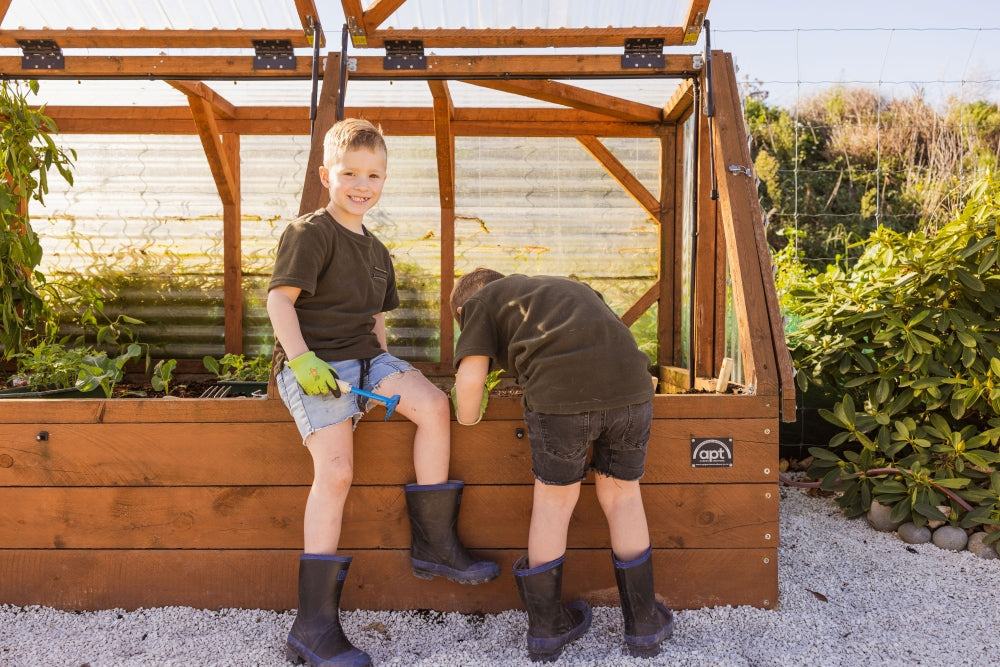
APT large garden bed pictured above
Protecting Vegetables From Birds
Sparrows, blackbirds, and starlings are relentless. They will pull out young seedlings looking for grubs, peck at ripening tomatoes, and strip berries the day before you planned to pick them.
A bird-proof garden bed needs a cover that is secure at every edge, not just draped over the top. APT's polycarbonate canopy system encloses the growing space fully, so birds cannot get underneath or through a gap at the side. Unlike loose netting which tears, sags, and needs constant readjusting, the canopy stays in place through wind and rain without you having to think about it.
This matters most in spring, when new seedlings are at their most vulnerable and a single visit from a hungry blackbird can undo weeks of work.

Protecting Crops From Weather
Wind, hail, and frost are the other side of the equation. A pest-protected vegetable garden is only half the job if the same bed offers no protection from the weather.
APT's canopy does double duty here. It buffers strong wind, so climbing beans and tall brassicas are not flattened overnight. It shields tender crops from light frost, extending your growing season at both ends. And it keeps torrential rain from waterlogging the soil and rotting root vegetables, which is a common problem in open beds during a wet Wellington or West Coast winter. Less rain sitting on leaves and in the soil also means fewer of the fungal and mould problems such as blight and powdery mildew that thrive in damp, humid conditions after heavy rain.
For gardeners in exposed, coastal, or frost-prone parts of the country, a covered veggie garden is essential for making sure you don’t have the constant job of covering and uncovering crops yourself.
Timber vs Plastic Raised Beds
All-plastic pod systems popularised the idea of a raised bed with a cover, and there is a reason the concept caught on. The principle is a good one, but where the difference shows up is in the frame that holds everything together.
An all-plastic bed is lightweight, which sounds convenient until a strong wind catches an empty one. The frame can flex and crack over time - especially with NZ's UV exposure - and once it is damaged, the whole unit is generally beyond repair.
A well-built timber raised bed sits firmly on the ground, holds its shape through years of exposure to the elements, and looks like it belongs in a garden. APT uses untreated macrocarpa for the frame - a timber that is naturally durable outdoors. Plastic still has a job to do here too - creating a see-through canopy overhead, where you want light in and pests out without adding weight. APT pairs a solid timber frame with a polycarbonate canopy, so each material is doing the part it is actually good at.

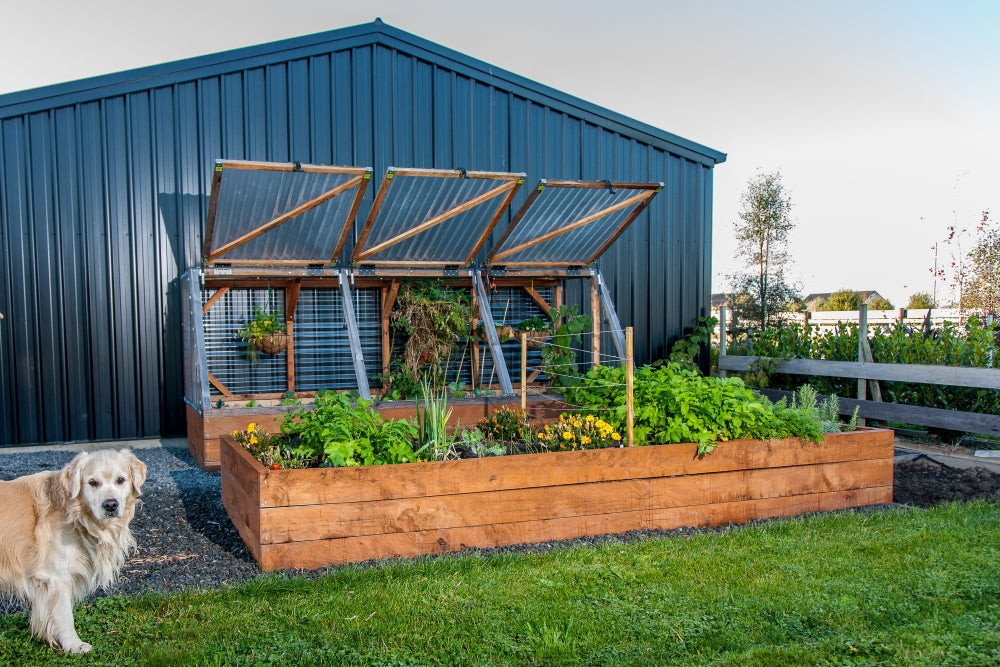
APT large garden bed pictured above
Why APT Beds Last Longer
APT beds are not one material fighting against another. Timber and plastic each cover the other's weak point, and three things set the result apart:
Untreated macrocarpa timber. Naturally resistant to rot and weather, and safe for growing food without any risk of treated timber chemicals near your soil.
Stainless steel fixtures. No rust, no corrosion, no fixtures failing before the timber does. It is a small detail, but it is the difference between a bed that lasts one winter and one that lasts many.
A canopy system built for the whole bed, not just the top. The polycarbonate cover is designed to work with the frame as one system, so it stays secure in the wind and keeps birds and pests out.
Every APT bed is made in New Zealand, for New Zealand conditions. It is the reason the design holds up in gardens from Northland to Southland.
Customer Photos
Check out these customer photos showing how our covered raised garden beds fit into all kinds of spaces, from compact courtyards to larger country gardens.


APT medium canopy garden bed located in a townhouse garden
Frequently Asked Questions
Do covered raised garden beds actually keep birds out?
Yes, provided the cover encloses the bed fully rather than just sitting over the top. APT's canopy system seals the growing space at every edge, which is what stops birds getting in from the side.
Will a covered garden bed protect against frost?
A canopy will not stop a hard frost entirely, but it does buffer temperature swings and protect against light frosts, which extends the growing season for tender crops in most parts of NZ.
Is timber or plastic better for a raised garden bed?
It depends what part of the bed you mean. For the frame, timber is the stronger long-term choice and handles wind and UV better than an all-plastic structure. Untreated macrocarpa is also a safer choice for growing food, since nothing leaches into the soil. For the canopy itself, a lightweight, see-through material like polycarbonate is the better choice, which is why APT pairs a timber frame with a polycarbonate cover rather than using one material for the whole bed.
Can I grow vegetables year-round in a covered raised bed?
Yes. That is the main benefit of the design. The covered, controlled environment protects seedlings and crops from the extremes that usually limit a NZ growing season, so you can extend your growing season at both ends.
Ready to stop losing crops to birds, wind, and frost? Have a look at APT's range of covered raised garden beds and see the canopy system in action.

Leave a comment
This site is protected by hCaptcha and the hCaptcha Privacy Policy and Terms of Service apply.